AI Writing Tools

Explore the best AI Writing Tools — independent reviews, comparisons, pricing and step-by-step how-to guides, curated by Aizhi.

  • Hello World: How to be Human in the Age of the Machine

    Hello World: How to be Human in the Age of the Machine

    Hello World: How to Be Human in the Age of the Machine (also titled Hello World: Being Human in the Age of Algorithms) is a book on the growing influence of algorithms and artificial intelligence (AI) on human life, authored by mathematician and science communicator Hannah Fry. The book examines how algorithms are increasingly shaping decisions in critical areas such as healthcare, transportation, justice, finance, and the arts. == Overview == Fry uses real-world examples, such as driverless cars and predictive policing, to illustrate her points. She emphasizes that algorithms are not inherently objective; they reflect biases embedded in their design and data inputs. While acknowledging their potential to improve efficiency and accuracy, Fry cautions against over-reliance on machines without human judgment. Fry explores moral questions surrounding algorithmic decision-making, such as whether machines can replace human empathy in critical situations. She advocates for greater scrutiny of algorithms to ensure fairness and avoid harmful biases. The book proposes a "cyborg future", where humans work alongside algorithms to enhance decision-making while retaining ultimate control. == Reception == Hello World has been praised for its clarity, engaging storytelling, and balanced perspective. Critics have highlighted Fry's ability to make complex topics accessible to general audiences while raising important questions about technology's impact on society. The book was shortlisted for awards such as the 2018 Baillie Gifford Prize and the Royal Society Science Book Prize.

    Read more →
  • Fuzzy relation

    Fuzzy relation

    A fuzzy relation is the cartesian product of mathematical fuzzy sets. Two fuzzy sets are taken as input, the fuzzy relation is then equal to the cross product of the sets which is created by vector multiplication. Usually, a rule base is stored in a matrix notation which allows the fuzzy controller to update its internal values. From a historical perspective, the first fuzzy relation was mentioned in the year 1971 by Lotfi A. Zadeh. A practical approach to describe a fuzzy relation is based on a 2d table. At first, a table is created which consists of fuzzy values from 0..1. The next step is to apply the if-then-rules to the values. The resulting numbers are stored in the table as an array. Fuzzy relations can be utilized in fuzzy databases.

    Read more →
  • Fuzzy differential equation

    Fuzzy differential equation

    Fuzzy differential equation are general concept of ordinary differential equation in mathematics defined as differential inclusion for non-uniform upper hemicontinuity convex set with compactness in fuzzy set. d x ( t ) / d t = F ( t , x ( t ) , α ) , {\displaystyle dx(t)/dt=F(t,x(t),\alpha ),} for all α ∈ [ 0 , 1 ] {\displaystyle \alpha \in [0,1]} . == First order fuzzy differential equation == A first order fuzzy differential equation with real constant or variable coefficients x ′ ( t ) + p ( t ) x ( t ) = f ( t ) {\displaystyle x'(t)+p(t)x(t)=f(t)} where p ( t ) {\displaystyle p(t)} is a real continuous function and f ( t ) : [ t 0 , ∞ ) → R F {\displaystyle f(t)\colon [t_{0},\infty )\rightarrow R_{F}} is a fuzzy continuous function y ( t 0 ) = y 0 {\displaystyle y(t_{0})=y_{0}} such that y 0 ∈ R F {\displaystyle y_{0}\in R_{F}} . == Linear systems of fuzzy differential equations == A system of equations of the form x ( t ) n ′ = a n 1 ( t ) x 1 ( t ) + . . . . . . + a n n ( t ) x n ( t ) + f n ( t ) {\displaystyle x(t)'_{n}=a_{n}1(t)x_{1}(t)+......+a_{n}n(t)x_{n}(t)+f_{n}(t)} where a i j {\displaystyle a_{i}j} are real functions and f i {\displaystyle f_{i}} are fuzzy functions x n ′ ( t ) = ∑ i = 0 1 a i j x i . {\displaystyle x'_{n}(t)=\sum _{i=0}^{1}a_{ij}x_{i}.} == Fuzzy partial differential equations == A fuzzy differential equation with partial differential operator is ∇ x ( t ) = F ( t , x ( t ) , α ) , {\displaystyle \nabla x(t)=F(t,x(t),\alpha ),} for all α ∈ [ 0 , 1 ] {\displaystyle \alpha \in [0,1]} . == Fuzzy fractional differential equation == A fuzzy differential equation with fractional differential operator is d n x ( t ) d t n = F ( t , x ( t ) , α ) , {\displaystyle {\frac {d^{n}x(t)}{dt^{n}}}=F(t,x(t),\alpha ),} for all α ∈ [ 0 , 1 ] {\displaystyle \alpha \in [0,1]} where n {\displaystyle n} is a rational number.

    Read more →
  • The Future of Truth (Rosenbaum book)

    The Future of Truth (Rosenbaum book)

    The Future of Truth: How AI Reshapes Reality is a 2026 book by American filmmaker and author Steven Rosenbaum about how artificial intelligence affects the concept of truth. It was published by Matt Holt Books on May 12, 2026, to positive media attention; on May 19, in response to an inquiry from The New York Times, Rosenbaum acknowledged that the book itself contains multiple misattributed or false quotes that were hallucinated by AIs. == Synopsis == == Development == Rosenbaum has said that he developed the book using AI chatbots as research tools, indicating in his notes what information came from AI and sending those claims to a fact-checker affiliated with the publisher. He has said that he did not use AI tools to write the book itself. He has described AI tools as "a delightful writing companion ... strangely creative and crafty and unusual in all these ways", while acknowledging that sometimes "then it betrays you in ways that are just really quite horrible". Journalist and Nobel laureate Maria Ressa wrote the book's foreword. Taylor Lorenz, Michael Wolff, and Nicholas Thompson wrote blurbs promoting it. == Release and reception == The Future of Truth was published by Matt Holt Books, an imprint of BenBella Books, and distributed by Simon & Schuster. The book's release on May 12, 2026, was described by Futurism as "buzzy" and by The New York Times as "to great fanfare". On May 14, an excerpt was published in Wired under the title "Gen Z Is Pioneering a New Understanding of Truth". On May 17, the Times contacted Rosenbaum regarding a number of quotes that appeared to be falsified or misattributed; the following evening he confirmed that they were the result of AI hallucinations:As I disclosed in the book's acknowledgments, I used AI tools ChatGPT and Claude during the research, writing and editing process. That does not excuse these errors, of which I take full responsibility. I am now working with the editors to thoroughly review and quickly correct any affected passages; any future editions will be corrected. The Times documented several of the errors, including a quote from Kara Swisher that Swisher described as making it "sound like I have a stick up my butt" and a quote from Lisa Feldman Barrett that Barrett described as misrepresenting her views on the nature of emotions, social signals, and truth. The book also misattributed a quote by Meredith Broussard from an interview with Marketplace Tech as having been from her book Artificial Unintelligence and hallucinated several words in a quote from Lee McIntyre, although according to McIntyre it did not misrepresent his views. Wired's editors, in an addendum to the excerpt they published, said that all quotes included in it had been verified as part of their fact-checking process. Rosenbaum told the Times that the series of errors "serves as a warning about the risks of AI-assisted research and verification, that is why I wrote the book. These AI errors do not, in fact, diminish the larger questions that the book raises about truth, trust and AI and its impact on society, democracy and editorial." Maggie Harrison Dupré in Futurism expressed skepticism, writing "The risk of AI hallucinations ... is well-known. If you're going to literally write the book on post-AI truth, you should probably put some more elbow grease into fact-checking your AI-assisted research." Kyle Orland in Ars Technica, responding to Rosenbaum's statement that his error "demonstrates the problem more vividly than any abstract argument could", was similarly skeptical, writing that "if we accept this take, every avoidably obvious mess in the world might be a disguised good because it really helps illuminate the huge mistake. And that can't be right; sometimes 'negligence' is just that." Subsequent comments by Rosenbaum placed more blame on the chatbots, which he told The Atlantic "fucked up the book". Rosenbaum told Ars Technica that fact-checking occurred "incredibly effectively, but not a hundred percent"; Orland observed that "it's worth noting that most writers manage to include zero made-up quotes when they write a book". Rosenbaum said that he had "learned a lesson" and would be "much more suspicious" of AI in the future, but would continue to use AI in his research. Orland responded to Rosenbaum's characterization of AI as "magical" by comparing it to the One Ring from The Lord of the Rings, in that it "convinces many of those who use it that they can control its power properly" when many cannot. Orland highlighted the limits of traditional fact-checking regarding AI, given that fact-checkers are used to assuming that direct quotes are copied word-for-word from the source. Rosenbaum told Orland that the future of fact-checking for AI-researched works "probably includes mandatory source tracing for quotations, better provenance tracking, clearer standards around AI-assisted research, and potentially (more irony here) AI tools that audit citations against primary materials". Patrick Redford in Defector criticized Rosenbaum, alongside other artists tricked by AI, for failing to recognize AI as "the enemy". Will Oremus in The Atlantic described Redford's approach of stigmatizing AI writing as "reasonable", noting the presence of low-quality, seemingly AI-generated verbiage in The Future of Truth—a claim denied by Rosenbaum—before saying that the greater issue is finding the line at which AI assistance in writing becomes a problem. Oremus concluded, "The scandal can't just be that [Rosenbaum] used AI while working on his book, because he acknowledged that up front. He got in trouble because he had used AI badly, failing to check its work on a task at which it is famously unreliable."

    Read more →
  • Fully probabilistic design

    Fully probabilistic design

    Decision making (DM) can be seen as a purposeful choice of action sequences. It also covers control, a purposeful choice of input sequences. As a rule, it runs under randomness, uncertainty and incomplete knowledge. A range of prescriptive theories have been proposed how to make optimal decisions under these conditions. They optimise sequence of decision rules, mappings of the available knowledge on possible actions. This sequence is called strategy or policy. Among various theories, Bayesian DM is broadly accepted axiomatically based theory that solves the design of optimal decision strategy. It describes random, uncertain or incompletely known quantities as random variables, i.e. by their joint probability expressing belief in their possible values. The strategy that minimises expected loss (or equivalently maximises expected reward) expressing decision-maker's goals is then taken as the optimal strategy. While the probabilistic description of beliefs is uniquely and deductively driven by rules for joint probabilities, the composition and decomposition of the loss function have no such universally applicable formal machinery. Fully probabilistic design (of decision strategies or control, FPD) removes the mentioned drawback and expresses also the DM goals of by the "ideal" probability, which assigns high (small) values to desired (undesired) behaviours of the closed DM loop formed by the influenced world part and by the used strategy. FPD has axiomatic basis and has Bayesian DM as its restricted subpart. FPD has a range of theoretical consequences , and, importantly, has been successfully used to quite diverse application domains.

    Read more →
  • Woken Furies

    Woken Furies

    Woken Furies (2005) is a science fiction novel by British writer Richard Morgan. It is the third novel featuring the anti-hero Takeshi Kovacs and is the sequel to Broken Angels. This addition to the series casts light upon Kovacs' early life providing information on his post-envoy activities. Morgan's official website and interviews suggest that Woken Furies could be the last Kovacs novel, although in 2018 (before Netflix cancelled the show) Morgan stated that the Netflix adaptation has "kind of woken it all up again" after all these years, making him possibly reconsider being done with Kovacs. == Plot == Takeshi Kovacs finds himself in a new "sleeve," or human body, back on his home planet of Harlan's World. He is on the run after making numerous attacks against the Knights of the New Revelation, an extremist religious order responsible for the death of his lost love and her daughter. Because she had violated tenets about resleeving, her executioners dropped her and her daughter's cortical stacks in the sea, effectively preventing them from being resleeved (into new bodies). While trying to secure passage after his most recent attack, Kovacs saves a woman named Sylvie from a group of religious zealots. In return, she allows him to take refuge with her mercenary "deCom" crew as they head out to decommission sentient military hardware that has run amok on the island of New Hokkaido (AKA New Hok). Sylvie is the "command head" of her crew, co-ordinating them during missions by using her biologically implanted circuitry and software. During one of these missions, Sylvie collapses, regains consciousness, and Kovacs realizes that her personality seems to have been replaced by that of long-dead revolutionary leader Quellcrist Falconer. Harlan's World is surrounded by automated "orbitals" which target flying objects, such as vehicles, with high-energy beam weapons known as "angelfire"; Falconer is believed to have died without a backup of her cortical stack when her getaway aircraft was destroyed by angelfire 300 years prior. When Sylvie's crew returns from New Hok, they discover a younger version of Kovacs has been illegally duplicated into a different body (AKA "double sleeved") and is hunting them on behalf of the Harlan family that rules the planet. Most of Sylvie's crew is killed and Sylvie/Quellcrist is captured. Kovacs schemes to rescue Sylvie by approaching old criminal associates of his, the Little Blue Bugs. The Little Blue Bugs mount a semi-successful attack on a Harlan fortress and rescue Sylvie/Quellcrist. Hiding from Harlan forces in a floating base, the neo-Quellists are sold out by its owner and recaptured. An assault by Kovacs and a single UN Envoy on the base ends badly when Kovacs is betrayed by the Envoy who was actually embedded with several colleagues. However, Sylvie/Quellcrist has established a connection with the orbitals and calls down angelfire, eliminating their captors. The younger Kovacs is killed in the aftermath. Sylvie explains that angelfire is a destructive recording device. Thus, in destroying Quellcrist and the helicopter carrying her, it copied her. When the technology of the deCom crews advanced far enough, her persona was able to insert itself into Sylvie's implants and co-exist in her body. The novel ends with Kovacs, Virginia Vidaura, and Sylvie/Quellcrist waiting to see if they can use Sylvie/Quellcrist's newfound connection to the orbitals and the expansion of a long-dormant genetic virus to turn the population against the ruling oligarchy.

    Read more →
  • Stanhope Demonstrator

    Stanhope Demonstrator

    The Stanhope Demonstrator was the first machine to solve problems in logic. It was designed by Charles Stanhope, 3rd Earl Stanhope to demonstrate consequences in logic symbolically. The first model was constructed in 1775. It consisted of two slides coloured red and gray mounted in a square brass frame. This could be used to demonstrate the solution to a syllogistic type of problem in which objects might have two different properties and the question was how many would have both properties. Scales marked zero to ten were used to set the numbers or proportions of objects with the two properties. This form of inference anticipated the numerically definite syllogism which Augustus De Morgan laid out in his book, Formal Logic, in 1847. == Construction == The device was a brass plate about four inches square which was mounted on a piece of mahogany which was three-quarters of an inch thick. There was an opening with a depression in the wood about one and a half inches square and half an inch deep. This opening was called the holon, meaning "whole", and represented the full set of objects under consideration. A slide of red translucent glass could be inserted from the right across the holon. A slide of gray wood could be slid under the red slide. When the device was used for the "Rule for the Logic of Certainty", the gray slider was inserted from the left. When it was used for the "Rule for the Logic of Probability", the gray slider was inserted from above. The red and the gray sliders represented the two affirmative propositions which were being combined. Stanhope called these ho and los. At least four of the devices with this square style were built. In 1879, Robert Harley wrote that he had one which he had been given by Stanhope's great-grandson, Arthur, who had kept one. The other two were owned by Henry Prevost Babbage – the son of Charles Babbage, who continued his work on the Analytical Engine. One of the devices was donated to the Science Museum, London by the last Earl in 1953. Other styles, such as circular models, were constructed, but these were less convenient.

    Read more →
  • Abu Dhabi Autonomous Racing League

    Abu Dhabi Autonomous Racing League

    The Abu Dhabi Autonomous Racing League (A2RL) is an autonomous racing league based in Abu Dhabi and organized by ASPIRE, part of the UAE government's Advanced Technology Research Council. It has three distinct categories: the "car race", the drone race, and the buggy race. The first car race was held on 27 April 2024 at the Yas Marina Circuit, marking the first major autonomous formula race outside the US since the now-folded Roborace championship. The first drone race was held on 11 and 12 April 2025. == Formats == A2RL has three distinct formats, the formula racing format (dubbed the Car Race), the quadcopter drone racing format (dubbed the Drone Race), and the off-road dune buggy racing format (dubbed the Buggy Race). === Car Race === A2RL's main event, the car race is a standard formula racing format with self-driving formula cars. The cars are made by Dallara and are modified versions of Super Formula cars with Yokohama tires. These cars had the CPUs of their AIs mounted where the driver's seat is on a non-modified chassis, as well as hydraulic actuators for AI control of the vehicle, multiple sensor systems including LIDAR and GPS, and a large LED indicator showing the status of the AI. The first car race was held on 27 April 2024. This race was marked by the cars' subpar performance: Out of four cars that qualified, only two finished the race - the other two did not. The next race was held on 15 November 2025, with 11 teams. ==== Technical specifications ==== The full list of technical specifications are as follows: Chassis: Dallara EAV24 (modified Dallara SF23) Forward suspension: Pushrod type, torsion bar spring, adjustable dampers, third element Rear suspension: Pushrod type, torsion bar, coil springs, adjustable dampers, third element Tires: Yokohama Advan Drive-by-wire system: Provided by Meccanica 42, the DBW system consists of steering and brake actuators, with a central ECU that coordinates the driving actions and reacts to any critical situation in real-time. Brakes: Brembo calipers, Brembo carbon discs, electro-hydraulically activated Engine: 4 Piston Racing K20C1 (based on Honda 2.0l; turbocharged 4-cylinder engine) Gearbox: 3MO 6-speed gearbox Sensor suite: 7x Sony IMX728 cameras, 4x ZF ProWave radar units, 3x Seyond Falcon Kinetic lidar units Main computer: Neousys RGS-8805GC ==== Races held ==== === Drone Race === Created in partnership with the Drone Champions' League, the drone race is the quadcopter drone racing aerial format of the A2RL. The first race was held on 11/12 April 2025 at the ADNEC Marina Hall. 10 teams are scheduled to take part. === Buggy Race === The buggy race will be the off-road format of the A2RL using self-driving dune buggies. No date or number of teams has been announced for the first race. === Other events === A2RL is known to host AI vs AI and Human vs AI events, in Abu Dhabi and abroad. One such event took place at the Suzuka Circuit in Japan. The Human vs AI race was precluded due to AI car "Yalla" crashing into the wall during the formation lap. == Team lists ==

    Read more →
  • Web application

    Web application

    A web application (or web app) is application software that is created with web technologies and runs via a web browser. Web applications emerged during the late 1990s and allowed for the server to dynamically build a response to the request, in contrast to static web pages. Web applications are commonly distributed via a web server. There are several different tier systems that web applications use to communicate between the web browsers, the client interface, and server data. Each system has its own uses as they function in different ways. However, there are many security risks that developers must be aware of during development; proper measures to protect user data are vital. Web applications are often constructed with the use of a web application framework. Single-page applications (SPAs) and progressive web apps (PWAs) are two architectural approaches to creating web applications that provide a user experience similar to native apps, including features such as smooth navigation, offline support, and faster interactions. Web applications are often fully hosted on remote cloud services, can require a constant connection to them, and can replace conventional desktop applications for operating systems such as Microsoft Windows, thus facilitating the operation of software as a service as it grants the developer the power to tightly control billing based on use of the remote services as well as vendor lock-in by hosting data remotely. Modern browsers such as Chrome offer sandboxing for every browser tab which improves security and restricts access to local resources. No software installation is required as the app runs within the browser which reduces the need for managing software installations. With the use of remote cloud services, customers do not need to manage servers as that can be left to the developer and the cloud service and can use the software with a relatively low power, low-resource PC such as a thin client. The source code of the application can stay the same across operating systems and devices of users with the use of responsive web design, since it only needs to be compatible with web browsers which adhere to web standards, making the code highly portable and saving on development time. Numerous JavaScript frameworks and CSS frameworks facilitate development. == History == The concept of a "web application" was first introduced in the Java language in the Servlet Specification version 2.2, which was released in 1999. At that time, both JavaScript and XML had already been developed, but the XMLHttpRequest object had only been recently introduced on Internet Explorer 5 as an ActiveX object. Beginning around the early 2000s, applications such as "Myspace (2003), Gmail (2004), Digg (2004), [and] Google Maps (2005)," started to make their client sides more and more interactive. A web page script is able to contact the server for storing/retrieving data without downloading an entire web page. The practice became known as Ajax in 2005. Eventually this was replaced by web APIs using JSON, accessed via JavaScript asynchronously on the client side. In earlier computing models like client-server, the processing load for the application was shared between code on the server and code installed on each client locally. In other words, an application had its own pre-compiled client program which served as its user interface and had to be separately installed on each user's personal computer. An upgrade to the server-side code of the application would typically also require an upgrade to the client-side code installed on each user workstation, adding to the support cost and decreasing productivity. Additionally, both the client and server components of the application were bound tightly to a particular computer architecture and operating system, which made porting them to other systems prohibitively expensive for all but the largest applications. Later, in 1995, Netscape introduced the client-side scripting language called JavaScript, which allowed programmers to add dynamic elements to the user interface that ran on the client side. Essentially, instead of sending data to the server in order to generate an entire web page, the embedded scripts of the downloaded page can perform various tasks such as input validation or showing/hiding parts of the page. "Progressive web apps", the term coined by designer Frances Berriman and Google Chrome engineer Alex Russell in 2015, refers to apps taking advantage of new features supported by modern browsers, which initially run inside a web browser tab but later can run completely offline and can be launched without entering the app URL in the browser. == Structure == Traditional PC applications are typically single-tiered, residing solely on the client machine. In contrast, web applications inherently facilitate a multi-tiered architecture. Though many variations are possible, the most common structure is the three-tiered application. In its most common form, the three tiers are called presentation, application and storage. The first tier, presentation, refers to a web browser itself. The second tier refers to any engine using dynamic web content technology (such as ASP, CGI, ColdFusion, Dart, JSP/Java, Node.js, PHP, Python or Ruby on Rails). The third tier refers to a database that stores data and determines the structure of a user interface. Essentially, when using the three-tiered system, the web browser sends requests to the engine, which then services them by making queries and updates against the database and generates a user interface. The 3-tier solution may fall short when dealing with more complex applications, and may need to be replaced with the n-tiered approach; the greatest benefit of which is how business logic (which resides on the application tier) is broken down into a more fine-grained model. Another benefit would be to add an integration tier, which separates the data tier and provides an easy-to-use interface to access the data. For example, the client data would be accessed by calling a "list_clients()" function instead of making an SQL query directly against the client table on the database. This allows the underlying database to be replaced without making any change to the other tiers. There are some who view a web application as a two-tier architecture. This can be a "smart" client that performs all the work and queries a "dumb" server, or a "dumb" client that relies on a "smart" server. The client would handle the presentation tier, the server would have the database (storage tier), and the business logic (application tier) would be on one of them or on both. While this increases the scalability of the applications and separates the display and the database, it still does not allow for true specialization of layers, so most applications will outgrow this model. == Security == Security breaches on these kinds of applications are a major concern because it can involve both enterprise information and private customer data. Protecting these assets is an important part of any web application, and there are some key operational areas that must be included in the development process. This includes processes for authentication, authorization, asset handling, input, and logging and auditing. Building security into the applications from the beginning is sometimes more effective and less disruptive in the long run. == Development == Writing web applications is simplified with the use of web application frameworks. These frameworks facilitate rapid application development by allowing a development team to focus on the parts of their application which are unique to their goals without having to resolve common development issues such as user management. In addition, there is potential for the development of applications on Internet operating systems, although currently there are not many viable platforms that fit this model.

    Read more →
  • Stable Diffusion

    Stable Diffusion

    Stable Diffusion is a deep learning, text-to-image model released in 2022 based on diffusion techniques. The generative artificial intelligence technology is the premier product of Stability AI and is considered to be a part of the ongoing AI boom. It is primarily used to generate detailed images conditioned on text descriptions, though it can also be applied to other tasks such as inpainting, outpainting, and generating image-to-image translations guided by a text prompt. Its development involved researchers from the CompVis Group at LMU Munich and Runway with a computational donation from Stability and training data from non-profit organizations. Stable Diffusion is a latent diffusion model, a kind of deep generative artificial neural network. Its code and model weights have been released publicly, and an optimized version can run on most consumer hardware equipped with a modest GPU with as little as 2.4 GB VRAM. This marked a departure from previous proprietary text-to-image models such as DALL-E and Midjourney which were accessible only via cloud services. == Development == Stable Diffusion originated from a project called Latent Diffusion, developed in Germany by researchers at LMU Munich in Munich and Heidelberg University. Four of the original 5 authors (Robin Rombach, Andreas Blattmann, Patrick Esser and Dominik Lorenz) later joined Stability AI and released subsequent versions of Stable Diffusion. The technical license for the model was released by the CompVis group at LMU Munich. Development was led by Patrick Esser of Runway and Robin Rombach of CompVis, who were among the researchers who had earlier invented the latent diffusion model architecture used by Stable Diffusion. Stability AI also credited EleutherAI and LAION (a German nonprofit which assembled the dataset on which Stable Diffusion was trained) as supporters of the project. == Technology == === Architecture === Diffusion models, introduced in 2015, are trained with the objective of removing successive applications of Gaussian noise on training images, which can be thought of as a sequence of denoising autoencoders. The name diffusion is from the thermodynamic diffusion, since they were first developed with inspiration from thermodynamics. Models in Stable Diffusion series before SD 3 all used a variant of diffusion models, called latent diffusion model (LDM), developed in 2021 by the CompVis (Computer Vision & Learning) group at LMU Munich. Stable Diffusion consists of 3 parts: the variational autoencoder (VAE), U-Net, and an optional text encoder. The VAE encoder compresses the image from pixel space to a smaller dimensional latent space, capturing a more fundamental semantic meaning of the image. Gaussian noise is iteratively applied to the compressed latent representation during forward diffusion. The U-Net block, composed of a ResNet backbone, denoises the output from forward diffusion backwards to obtain a latent representation. Finally, the VAE decoder generates the final image by converting the representation back into pixel space. The denoising step can be flexibly conditioned on a string of text, an image, or another modality. The encoded conditioning data is exposed to denoising U-Nets via a cross-attention mechanism. For conditioning on text, the fixed, pretrained CLIP ViT-L/14 text encoder is used to transform text prompts to an embedding space. Researchers point to increased computational efficiency for training and generation as an advantage of LDMs. With 860 million parameters in the U-Net and 123 million in the text encoder, Stable Diffusion is considered relatively lightweight by 2022 standards, and unlike other diffusion models, it can run on consumer GPUs, and even CPU-only if using the OpenVINO version of Stable Diffusion. ==== SD XL ==== The XL version uses the same LDM architecture as previous versions, except larger: larger UNet backbone, larger cross-attention context, two text encoders instead of one, and trained on multiple aspect ratios (not just the square aspect ratio like previous versions). The SD XL Refiner, released at the same time, has the same architecture as SD XL, but it was trained for adding fine details to preexisting images via text-conditional img2img. ==== SD 3.0 ==== The 3.0 version completely changes the backbone. Not a UNet, but a Rectified Flow Transformer, which implements the rectified flow method with a Transformer. The Transformer architecture used for SD 3.0 has three "tracks", for original text encoding, transformed text encoding, and image encoding (in latent space). The transformed text encoding and image encoding are mixed during each transformer block. The architecture is named "multimodal diffusion transformer (MMDiT), where the "multimodal" means that it mixes text and image encodings inside its operations. This differs from previous versions of DiT, where the text encoding affects the image encoding, but not vice versa. === Training data === Stable Diffusion was trained on pairs of images and captions taken from LAION-5B, a publicly available dataset derived from Common Crawl data scraped from the web, where 5 billion image-text pairs were classified based on language and filtered into separate datasets by resolution, a predicted likelihood of containing a watermark, and predicted "aesthetic" score (e.g. subjective visual quality). The dataset was created by LAION, a German non-profit which receives funding from Stability AI. The Stable Diffusion model was trained on three subsets of LAION-5B: laion2B-en, laion-high-resolution, and laion-aesthetics v2 5+. A third-party analysis of the model's training data identified that out of a smaller subset of 12 million images taken from the original wider dataset used, approximately 47% of the sample size of images came from 100 different domains, with Pinterest taking up 8.5% of the subset, followed by websites such as WordPress, Blogspot, Flickr, DeviantArt and Wikimedia Commons. An investigation by Bayerischer Rundfunk showed that LAION's datasets, hosted on Hugging Face, contain large amounts of private and sensitive data. === Training procedures === The model was initially trained on the laion2B-en and laion-high-resolution subsets, with the last few rounds of training done on LAION-Aesthetics v2 5+, a subset of 600 million captioned images which the LAION-Aesthetics Predictor V2 predicted that humans would, on average, give a score of at least 5 out of 10 when asked to rate how much they liked them. The LAION-Aesthetics v2 5+ subset also excluded low-resolution images and images which LAION-5B-WatermarkDetection identified as carrying a watermark with greater than 80% probability. Final rounds of training additionally dropped 10% of text conditioning to improve Classifier-Free Diffusion Guidance. The model was trained using 256 Nvidia A100 GPUs on Amazon Web Services for a total of 150,000 GPU-hours, at a cost of $600,000. === Limitations === Stable Diffusion has issues with degradation and inaccuracies in certain scenarios. Initial releases of the model were trained on a dataset that consists of 512×512 resolution images, meaning that the quality of generated images noticeably degrades when user specifications deviate from its "expected" 512×512 resolution; the version 2.0 update of the Stable Diffusion model later introduced the ability to natively generate images at 768×768 resolution. Another challenge is in generating human limbs due to poor data quality of limbs in the LAION database. The model is insufficiently trained to replicate human limbs and faces due to the lack of representative features in the database, and prompting the model to generate images of such type can confound the model. In addition to human limbs, Stable Diffusion is unable to generate legible ambigrams and some other forms of text and typography. Stable Diffusion XL (SDXL) version 1.0, released in July 2023, introduced native 1024x1024 resolution and improved generation for limbs and text. Accessibility for individual developers can also be a problem. In order to customize the model for new use cases that are not included in the dataset, such as generating anime characters ("waifu diffusion"), new data and further training are required. Fine-tuned adaptations of Stable Diffusion created through additional retraining have been used for a variety of different use-cases, from medical imaging to algorithmically generated music. However, this fine-tuning process is sensitive to the quality of new data; low resolution images or different resolutions from the original data can not only fail to learn the new task but degrade the overall performance of the model. Even when the model is additionally trained on high quality images, it is difficult for individuals to run models in consumer electronics. For example, the training process for waifu-diffusion requires a minimum 30 GB of VRAM, which exceeds the usual resource provided in such consumer GPUs as Nvidia's GeForce 30 series, w

    Read more →
  • The 100 (TV series)

    The 100 (TV series)

    The 100 (pronounced "The Hundred" ) is an American post-apocalyptic science fiction drama television series that premiered on March 19, 2014, on the CW network, and ended on September 30, 2020. Developed by Jason Rothenberg, the series is based on the young adult novel series The 100 by Kass Morgan. The 100 follows descendants of post-apocalyptic survivors from a space habitat, the Ark, who return to Earth nearly a century after a devastating nuclear apocalypse; the first people sent to Earth are a group of juvenile delinquents who encounter another group of survivors on the ground. The juvenile delinquents include Clarke Griffin (Eliza Taylor), Finn Collins (Thomas McDonell), Bellamy Blake (Bob Morley), Octavia Blake (Marie Avgeropoulos), Jasper Jordan (Devon Bostick), Monty Green (Christopher Larkin), and John Murphy (Richard Harmon). Other lead characters include Clarke's mother Dr. Abby Griffin (Paige Turco), Marcus Kane (Henry Ian Cusick), and Chancellor Thelonious Jaha (Isaiah Washington), all of whom are council members on the Ark, and Raven Reyes (Lindsey Morgan), a mechanic aboard the Ark. == Plot == Ninety-seven years after a devastating nuclear apocalypse wipes out most human life on Earth, thousands of people now live in a space station orbiting Earth, which they call the Ark. Three generations have been born in space, but when life-support systems on the Ark begin to fail, one hundred juvenile detainees are sent to Earth in a last attempt to determine whether it is habitable, or at least save resources for the remaining residents of the Ark. They discover that some humans survived the apocalypse: the Grounders, who live in clans locked in a power struggle; the Reapers, another group of grounders who have been turned into cannibals by the Mountain Men; and the Mountain Men, who live in Mount Weather, descended from those who locked themselves away before the apocalypse. Under the leadership of Clarke and Bellamy, the juveniles attempt to survive the harsh surface conditions, battle hostile grounders and establish communication with the Ark. In the second season, the survivors face a new threat from the Mountain Men, who harvest their bone marrow to survive the radiation. Clarke and the others form a fragile alliance with the grounders to rescue their people. The season ends with Clarke making a devastating choice to save them all. In season three, power struggles erupt between the Arkadians and the grounders after a controversial new leader takes charge. Meanwhile, an AI named A.L.I.E., responsible for the original apocalypse, begins taking control of people’s minds. Clarke destroys A.L.I.E. but learns another disaster is imminent. In the fourth season, nuclear reactors are melting down, threatening to wipe out life again. Clarke and her friends search for ways to survive, including experimenting with radiation-resistant blood and finding an underground bunker. As time runs out, only a select few are able to take shelter. The fifth season picks up six years later, when Earth is left largely uninhabitable except for one green valley, where new enemies arrive. Clarke protects her adopted daughter Madi while former survivors return from space and underground, triggering another war. The battle ends with the valley destroyed and the group entering cryosleep to find a new home. In season six, the group awakens 125 years later on a new planet called Sanctum, ruled by powerful families known as the Primes. Clarke fights to stop body-snatching rituals and protect her people from new threats, including a rebel group and a dangerous AI influence. The season ends with major losses and the destruction of the Primes' rule. In the seventh and final season, the survivors face unrest on Sanctum and clash with a mysterious group called the Disciples, who believe Clarke is key to saving humanity. A wormhole network reveals multiple planets and a final "test" that determines the fate of the species. Most transcend into a higher consciousness, but Clarke and a few others choose to live out their lives on a reborn Earth. == Cast and characters == Eliza Taylor as Clarke Griffin Paige Turco as Abigail "Abby" Griffin (seasons 1–6; guest season 7) Thomas McDonell as Finn Collins (seasons 1–2) Eli Goree as Wells Jaha (season 1; guest season 2) Marie Avgeropoulos as Octavia Blake Bob Morley as Bellamy Blake Kelly Hu as Callie "Cece" Cartwig (season 1) Christopher Larkin as Monty Green (seasons 1–5; guest season 6) Devon Bostick as Jasper Jordan (seasons 1–4) Isaiah Washington as Thelonious Jaha (seasons 1–5) Henry Ian Cusick as Marcus Kane (seasons 1–6) Lindsey Morgan as Raven Reyes (seasons 2–7; recurring season 1) Ricky Whittle as Lincoln (seasons 2–3; recurring season 1) Richard Harmon as John Murphy (seasons 3–7; recurring seasons 1–2) Zach McGowan as Roan (season 4; recurring season 3; guest season 7) Tasya Teles as Echo / Ash (seasons 5–7; guest seasons 2–3; recurring season 4) Shannon Kook as Jordan Green (seasons 6–7; guest season 5) JR Bourne as Russell Lightbourne / Malachi / Sheidheda (season 7; recurring season 6) Chuku Modu as Gabriel Santiago (season 7; recurring season 6) Shelby Flannery as Hope Diyoza (season 7; guest season 6) =

    Read more →
  • Fuzzy measure theory

    Fuzzy measure theory

    In mathematics, fuzzy measure theory considers generalized measures in which the additive property is replaced by the weaker property of monotonicity. The central concept of fuzzy measure theory is the fuzzy measure (also capacity, see ), which was introduced by Choquet in 1953 and independently defined by Sugeno in 1974 in the context of fuzzy integrals. There exists a number of different classes of fuzzy measures including plausibility/belief measures, possibility/necessity measures, and probability measures, which are a subset of classical measures. == Definitions == Let X {\displaystyle \mathbf {X} } be a universe of discourse, C {\displaystyle {\mathcal {C}}} be a class of subsets of X {\displaystyle \mathbf {X} } , and E , F ∈ C {\displaystyle E,F\in {\mathcal {C}}} . A function g : C → R {\displaystyle g:{\mathcal {C}}\to \mathbb {R} } where ∅ ∈ C ⇒ g ( ∅ ) = 0 {\displaystyle \emptyset \in {\mathcal {C}}\Rightarrow g(\emptyset )=0} E ⊆ F ⇒ g ( E ) ≤ g ( F ) {\displaystyle E\subseteq F\Rightarrow g(E)\leq g(F)} is called a fuzzy measure. A fuzzy measure is called normalized or regular if g ( X ) = 1 {\displaystyle g(\mathbf {X} )=1} . == Properties of fuzzy measures == A fuzzy measure is: additive if for any E , F ∈ C {\displaystyle E,F\in {\mathcal {C}}} such that E ∩ F = ∅ {\displaystyle E\cap F=\emptyset } , we have g ( E ∪ F ) = g ( E ) + g ( F ) . {\displaystyle g(E\cup F)=g(E)+g(F).} ; supermodular if for any E , F ∈ C {\displaystyle E,F\in {\mathcal {C}}} , we have g ( E ∪ F ) + g ( E ∩ F ) ≥ g ( E ) + g ( F ) {\displaystyle g(E\cup F)+g(E\cap F)\geq g(E)+g(F)} ; submodular if for any E , F ∈ C {\displaystyle E,F\in {\mathcal {C}}} , we have g ( E ∪ F ) + g ( E ∩ F ) ≤ g ( E ) + g ( F ) {\displaystyle g(E\cup F)+g(E\cap F)\leq g(E)+g(F)} ; superadditive if for any E , F ∈ C {\displaystyle E,F\in {\mathcal {C}}} such that E ∩ F = ∅ {\displaystyle E\cap F=\emptyset } , we have g ( E ∪ F ) ≥ g ( E ) + g ( F ) {\displaystyle g(E\cup F)\geq g(E)+g(F)} ; subadditive if for any E , F ∈ C {\displaystyle E,F\in {\mathcal {C}}} such that E ∩ F = ∅ {\displaystyle E\cap F=\emptyset } , we have g ( E ∪ F ) ≤ g ( E ) + g ( F ) {\displaystyle g(E\cup F)\leq g(E)+g(F)} ; symmetric if for any E , F ∈ C {\displaystyle E,F\in {\mathcal {C}}} , we have | E | = | F | {\displaystyle |E|=|F|} implies g ( E ) = g ( F ) {\displaystyle g(E)=g(F)} ; Boolean if for any E ∈ C {\displaystyle E\in {\mathcal {C}}} , we have g ( E ) = 0 {\displaystyle g(E)=0} or g ( E ) = 1 {\displaystyle g(E)=1} . Understanding the properties of fuzzy measures is useful in application. When a fuzzy measure is used to define a function such as the Sugeno integral or Choquet integral, these properties will be crucial in understanding the function's behavior. For instance, the Choquet integral with respect to an additive fuzzy measure reduces to the Lebesgue integral. In discrete cases, a symmetric fuzzy measure will result in the ordered weighted averaging (OWA) operator. Submodular fuzzy measures result in convex functions, while supermodular fuzzy measures result in concave functions when used to define a Choquet integral. == Möbius representation == Let g be a fuzzy measure. The Möbius representation of g is given by the set function M, where for every E , F ⊆ X {\displaystyle E,F\subseteq X} , M ( E ) = ∑ F ⊆ E ( − 1 ) | E ∖ F | g ( F ) . {\displaystyle M(E)=\sum _{F\subseteq E}(-1)^{|E\backslash F|}g(F).} The equivalent axioms in Möbius representation are: M ( ∅ ) = 0 {\displaystyle M(\emptyset )=0} . ∑ F ⊆ E | i ∈ F M ( F ) ≥ 0 {\displaystyle \sum _{F\subseteq E|i\in F}M(F)\geq 0} , for all E ⊆ X {\displaystyle E\subseteq \mathbf {X} } and all i ∈ E {\displaystyle i\in E} A fuzzy measure in Möbius representation M is called normalized if ∑ E ⊆ X M ( E ) = 1. {\displaystyle \sum _{E\subseteq \mathbf {X} }M(E)=1.} Möbius representation can be used to give an indication of which subsets of X interact with one another. For instance, an additive fuzzy measure has Möbius values all equal to zero except for singletons. The fuzzy measure g in standard representation can be recovered from the Möbius form using the Zeta transform: g ( E ) = ∑ F ⊆ E M ( F ) , ∀ E ⊆ X . {\displaystyle g(E)=\sum _{F\subseteq E}M(F),\forall E\subseteq \mathbf {X} .} == Simplification assumptions for fuzzy measures == Fuzzy measures are defined on a semiring of sets or monotone class, which may be as granular as the power set of X, and even in discrete cases the number of variables can be as large as 2|X|. For this reason, in the context of multi-criteria decision analysis and other disciplines, simplification assumptions on the fuzzy measure have been introduced so that it is less computationally expensive to determine and use. For instance, when it is assumed the fuzzy measure is additive, it will hold that g ( E ) = ∑ i ∈ E g ( { i } ) {\displaystyle g(E)=\sum _{i\in E}g(\{i\})} and the values of the fuzzy measure can be evaluated from the values on X. Similarly, a symmetric fuzzy measure is defined uniquely by |X| values. Two important fuzzy measures that can be used are the Sugeno- or λ {\displaystyle \lambda } -fuzzy measure and k-additive measures, introduced by Sugeno and Grabisch respectively. === Sugeno λ-measure === The Sugeno λ {\displaystyle \lambda } -measure is a special case of fuzzy measures defined iteratively. It has the following definition: ==== Definition ==== Let X = { x 1 , … , x n } {\displaystyle \mathbf {X} =\left\lbrace x_{1},\dots ,x_{n}\right\rbrace } be a finite set and let λ ∈ ( − 1 , + ∞ ) {\displaystyle \lambda \in (-1,+\infty )} . A Sugeno λ {\displaystyle \lambda } -measure is a function g : 2 X → [ 0 , 1 ] {\displaystyle g:2^{X}\to [0,1]} such that g ( X ) = 1 {\displaystyle g(X)=1} . if A , B ⊆ X {\displaystyle A,B\subseteq \mathbf {X} } (alternatively A , B ∈ 2 X {\displaystyle A,B\in 2^{\mathbf {X} }} ) with A ∩ B = ∅ {\displaystyle A\cap B=\emptyset } then g ( A ∪ B ) = g ( A ) + g ( B ) + λ g ( A ) g ( B ) {\displaystyle g(A\cup B)=g(A)+g(B)+\lambda g(A)g(B)} . As a convention, the value of g at a singleton set { x i } {\displaystyle \left\lbrace x_{i}\right\rbrace } is called a density and is denoted by g i = g ( { x i } ) {\displaystyle g_{i}=g(\left\lbrace x_{i}\right\rbrace )} . In addition, we have that λ {\displaystyle \lambda } satisfies the property λ + 1 = ∏ i = 1 n ( 1 + λ g i ) {\displaystyle \lambda +1=\prod _{i=1}^{n}(1+\lambda g_{i})} . Tahani and Keller as well as Wang and Klir have shown that once the densities are known, it is possible to use the previous polynomial to obtain the values of λ {\displaystyle \lambda } uniquely. === k-additive fuzzy measure === The k-additive fuzzy measure limits the interaction between the subsets E ⊆ X {\displaystyle E\subseteq X} to size | E | = k {\displaystyle |E|=k} . This drastically reduces the number of variables needed to define the fuzzy measure, and as k can be anything from 1 (in which case the fuzzy measure is additive) to X, it allows for a compromise between modelling ability and simplicity. ==== Definition ==== A discrete fuzzy measure g on a set X is called k-additive ( 1 ≤ k ≤ | X | {\displaystyle 1\leq k\leq |\mathbf {X} |} ) if its Möbius representation verifies M ( E ) = 0 {\displaystyle M(E)=0} , whenever | E | > k {\displaystyle |E|>k} for any E ⊆ X {\displaystyle E\subseteq \mathbf {X} } , and there exists a subset F with k elements such that M ( F ) ≠ 0 {\displaystyle M(F)\neq 0} . == Shapley and interaction indices == In game theory, the Shapley value or Shapley index is used to indicate the weight of a game. Shapley values can be calculated for fuzzy measures in order to give some indication of the importance of each singleton. In the case of additive fuzzy measures, the Shapley value will be the same as each singleton. For a given fuzzy measure g, and | X | = n {\displaystyle |\mathbf {X} |=n} , the Shapley index for every i , … , n ∈ X {\displaystyle i,\dots ,n\in X} is: ϕ ( i ) = ∑ E ⊆ X ∖ { i } ( n − | E | − 1 ) ! | E | ! n ! [ g ( E ∪ { i } ) − g ( E ) ] . {\displaystyle \phi (i)=\sum _{E\subseteq \mathbf {X} \backslash \{i\}}{\frac {(n-|E|-1)!|E|!}{n!}}[g(E\cup \{i\})-g(E)].} The Shapley value is the vector ϕ ( g ) = ( ψ ( 1 ) , … , ψ ( n ) ) . {\displaystyle \mathbf {\phi } (g)=(\psi (1),\dots ,\psi (n)).}

    Read more →
  • Engineering Historical Memory

    Engineering Historical Memory

    Engineering Historical Memory (EHM) is an online database in the digital humanities, serving as an open-access research tool for primary historical materials focused on 11th to 15th century Afro-Eurasia. It adopts computational methods to make historical documents machine-understandable. EHM parses traditional artifacts such as historical maps, travel accounts, chronicles and codices into computer-readable formats, and links them to secondary multi-media references, a process referred to as the "automatic narrative generation". This approach generates cultural narratives and facilitates interaction with the historical artifacts, making them accessible to audiences from various backgrounds. == History == EHM was first theorised in 2007 by researcher Andrea Nanetti when he was a visiting scholar at Princeton University, and the preliminary test results were published between 2008 and 2011. In 2013, the EHM research team was set up in Singapore following Nanetti's professorship at Nanyang Technological University (NTU). Two years later, after receiving several Microsoft research grants, EHM went live on Microsoft Azure. In 2018, the College of Humanities, Arts and Social Sciences (CoHASS) at NTU Singapore formed the Digital Humanities Research Cluster, as part of which, EHM has been an ongoing interdisciplinary research project led by Nanetti. Partnering with international educational and cultural institutions such as Ca' Foscari University of Venice, University of Florence, Taylor & Francis Group, Delft University of Technology (TUDelft), and SenticNet, EHM has been supported by over 130 scholars and engineers. == Applications == Primary historical materials on EHM are curated into several categories, including maps, travel accounts, chronicles, codices, sites, archival documents, and paintings, such as the Morosini Codex (listed under Chronicles) and Pope Gregory X's Privilege for the Holy Monastery of St Catherine of Sinai (listed under Archival Documents). EHM has been adopted by cultural organisations as an exhibition and research tool in the digital humanities field. An example is the publication of a digital interactive edition of Fra Mauro's Map of the World on EHM, a collaboration project between NTU Singapore and the Biblioteca Nazionale Marciana of Venice. The digitisation process of the map on EHM involved transcribing and geo-referencing the textual content in the 15th-century map, followed by creating semantic annotations to connect the map's content with related secondary data sources. The e-map was subsequently adopted and launched online by Museo Galileo in March 2022 and incorporated into the virtual exhibition "Venezia and Suzhou: Water Cities along the Silk Roads" (online, September-December 2022). In 2024, the Fra Mauro's Map of the World application on EHM was awarded the Digital Humanities and Multimedia Studies Prize (DHMS) by the Medieval Academy of America. Image-Based Video Search Engine is another experimental project under the EHM scope led by the research teams at Delft University of Technology (TUDelft) and NTU Singapore. This ongoing project aims to improve the efficiency of retrieving targeted objects from audio-visuals. == Awards == In 2021, EHM won the GLAMi Awards (MuseWeb Conference - Galleries, Libraries, Archives, and Museums Innovation awards) in the "Resources for Scholars and Researchers" category. In the same year, EHM was a Falling Walls finalist for Science Breakthrough of the Year in the category Social Sciences and Humanities after nominated by the School of Advanced Study at the University of London. In April 2022, the Italian National Commission for UNESCO has selected and sent the EHM project to the organisers of the "Jikji Memory of the World" Award for final evaluation. In January 2024, the Medieval Academy of America announced its 2024 Digital Humanities and Multimedia Studies Prize (DHMS) goes to the Fra Mauro's Map of the World application on EHM.

    Read more →
  • Netflix Prize

    Netflix Prize

    The Netflix Prize was an open competition for the best collaborative filtering algorithm to predict user ratings for films, based on previous ratings without any other information about the users or films, i.e. without the users being identified except by numbers assigned for the contest. The competition was held by Netflix, a video streaming service, and was open to anyone who was neither connected with Netflix (current and former employees, agents, close relatives of Netflix employees, etc.) nor a resident of certain blocked countries (such as Cuba or North Korea). On September 21, 2009, the grand prize of US$1,000,000 was given to the BellKor's Pragmatic Chaos team which bested Netflix's own algorithm for predicting ratings by 10.06%. == Problem and data sets == Netflix provided a training data set of 100,480,507 ratings that 480,189 users gave to 17,770 movies. Each training rating is a quadruplet of the form . The user and movie fields are integer IDs, while grades are from 1 to 5 (integer) stars. The qualifying data set contains over 2,817,131 triplets of the form , with grades known only to the jury. A participating team's algorithm must predict grades on the entire qualifying set, but they are informed of the score for only half of the data: a quiz set of 1,408,342 ratings. The other half is the test set of 1,408,789, and performance on this is used by the jury to determine potential prize winners. Only the judges know which ratings are in the quiz set, and which are in the test set—this arrangement is intended to make it difficult to hill climb on the test set. Submitted predictions are scored against the true grades in the form of root mean squared error (RMSE), and the goal is to reduce this error as much as possible. Note that, while the actual grades are integers in the range 1 to 5, submitted predictions need not be. Netflix also identified a probe subset of 1,408,395 ratings within the training data set. The probe, quiz, and test data sets were chosen to have similar statistical properties. In summary, the data used in the Netflix Prize looks as follows: Training set (99,072,112 ratings not including the probe set; 100,480,507 including the probe set) Probe set (1,408,395 ratings) Qualifying set (2,817,131 ratings) consisting of: Test set (1,408,789 ratings), used to determine winners Quiz set (1,408,342 ratings), used to calculate leaderboard scores For each movie, the title and year of release are provided in a separate dataset. No information at all is provided about users. In order to protect the privacy of the customers, "some of the rating data for some customers in the training and qualifying sets have been deliberately perturbed in one or more of the following ways: deleting ratings; inserting alternative ratings and dates; and modifying rating dates." The training set is constructed such that the average user rated over 200 movies, and the average movie was rated by over 5000 users. But there is wide variance in the data—some movies in the training set have as few as 3 ratings, while one user rated over 17,000 movies. There was some controversy as to the choice of RMSE as the defining metric. It has been claimed that even as small an improvement as 1% RMSE results in a significant difference in the ranking of the "top-10" most recommended movies for a user. == Prizes == Prizes were based on improvement over Netflix's own algorithm, called Cinematch, or the previous year's score if a team has made improvement beyond a certain threshold. A trivial algorithm that predicts for each movie in the quiz set its average grade from the training data produces an RMSE of 1.0540. Cinematch uses "straightforward statistical linear models with a lot of data conditioning." The performance of Cinematch had plateaued by 2006. Using only the training data, Cinematch scores an RMSE of 0.9514 on the quiz data, roughly a 10% improvement over the trivial algorithm. Cinematch has a similar performance on the test set, 0.9525. In order to win the grand prize of $1,000,000, a participating team had to improve this by another 10%, to achieve 0.8572 on the test set. Such an improvement on the quiz set corresponds to an RMSE of 0.8563. As long as no team won the grand prize, a progress prize of $50,000 was awarded every year for the best result thus far. However, in order to win this prize, an algorithm had to improve the RMSE on the quiz set by at least 1% over the previous progress prize winner (or over Cinematch, the first year). If no submission succeeded, the progress prize was not to be awarded for that year. To win a progress or grand prize a participant had to provide source code and a description of the algorithm to the jury within one week after being contacted by them. Following verification the winner also had to provide a non-exclusive license to Netflix. Netflix would publish only the description, not the source code, of the system. (To keep their algorithm and source code secret, a team could choose not to claim a prize.) The jury also kept their predictions secret from other participants. A team could send as many attempts to predict grades as they wish. Originally submissions were limited to once a week, but the interval was quickly modified to once a day. A team's best submission so far counted as their current submission. Once one of the teams succeeded in improving the RMSE by 10% or more, the jury would issue a last call, giving all teams 30 days to send their submissions. Only then, the team with the best submission was asked for the algorithm description, source code, and non-exclusive license, and, after successful verification; declared a grand prize winner. The contest would last until the grand prize winner was declared. Had no one received the grand prize, it would have lasted for at least five years (until October 2, 2011). After that date, the contest could have been terminated at any time at Netflix's sole discretion. == Progress over the years == The competition began on October 2, 2006. By October 8, a team called WXYZConsulting had already beaten Cinematch's results. By October 15, there were three teams who had beaten Cinematch, one of them by 1.06%, enough to qualify for the annual progress prize. By June 2007 over 20,000 teams had registered for the competition from over 150 countries. 2,000 teams had submitted over 13,000 prediction sets. Over the first year of the competition, a handful of front-runners traded first place. The more prominent ones were: WXYZConsulting, a team of Wei Xu and Yi Zhang. (A front runner during November–December 2006.) ML@UToronto A, a team from the University of Toronto led by Prof. Geoffrey Hinton. (A front runner during parts of October–December 2006.) Gravity, a team of four scientists from the Budapest University of Technology (A front runner during January–May 2007.) BellKor, a group of scientists from AT&T Labs. (A front runner since May 2007.) Dinosaur Planet, a team of three undergraduates from Princeton University. (A front runner on September 3, 2007 for one hour before BellKor snatched back the lead.) The algorithms used by the leading teams were usually an ensemble of singular value decomposition, k-nearest neighbor, neural networks, and so on. On August 12, 2007, many contestants gathered at the KDD Cup and Workshop 2007, held at San Jose, California. During the workshop all four of the top teams on the leaderboard at that time presented their techniques. The team from IBM Research—Yan Liu, Saharon Rosset, Claudia Perlich, and Zhenzhen Kou—won the third place in Task 1 and first place in Task 2. Over the second year of the competition, only three teams reached the leading position: BellKor, a group of scientists from AT&T Labs (front runner during May 2007 – September 2008) BigChaos, a team of Austrian scientists from Commendo Research & Consulting (single team front runner since October 2008) BellKor in BigChaos, a joint team of the two leading single teams (a front runner since September 2008) === 2007 Progress Prize === On September 2, 2007, the competition entered the "last call" period for the 2007 Progress Prize. Over 40,000 teams from 186 countries had entered the contest. They had thirty days to tender submissions for consideration. At the beginning of this period the leading team was BellKor, with an RMSE of 0.8728 (8.26% improvement), followed by Dinosaur Planet (RMSE = 0.8769; 7.83% improvement), and Gravity (RMSE = 0.8785; 7.66% improvement). In the last hour of the last call period, an entry by "KorBell" took first place. This turned out to be an alternate name for Team BellKor. On November 13, 2007, team KorBell (formerly BellKor) was declared the winner of the $50,000 Progress Prize with an RMSE of 0.8712 (8.43% improvement). The team consisted of three researchers from AT&T Labs, Yehuda Koren, Robert Bell, and Chris Volinsky. As required, they published a description of their a

    Read more →
  • Digital organism

    Digital organism

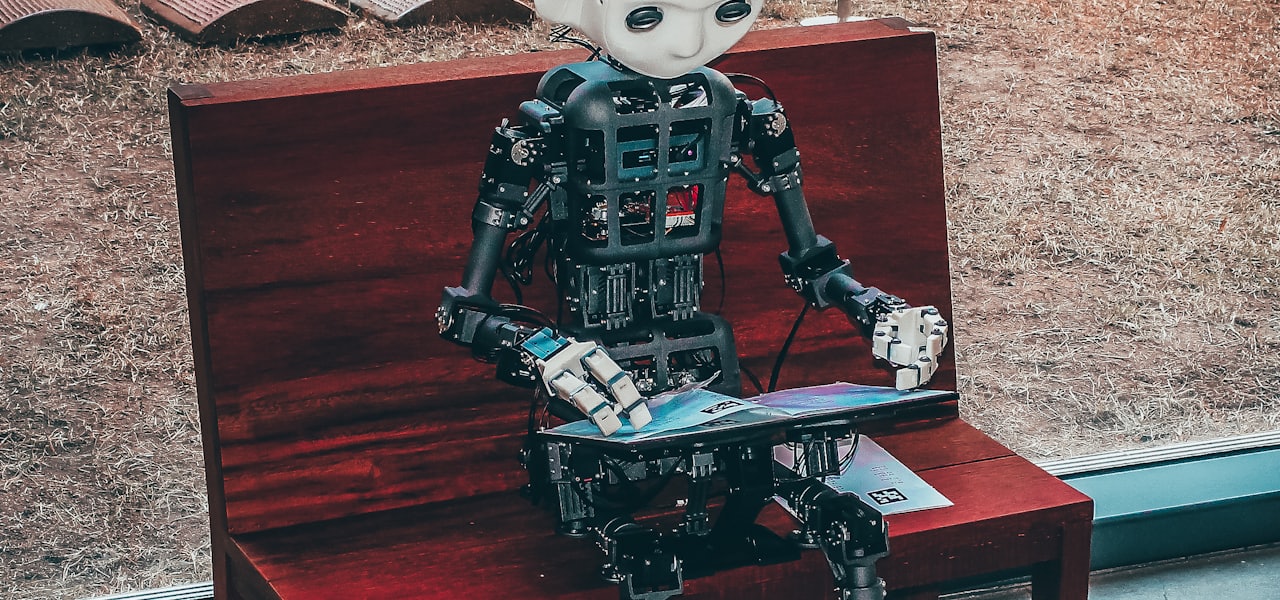
    A digital organism is a self-replicating computer program that mutates and evolves. Digital organisms are used as a tool to study the dynamics of Darwinian evolution, and to test or verify specific hypotheses or mathematical models of evolution. The study of digital organisms is closely related to the area of artificial life. == History == Digital organisms can be traced back to the game Darwin, developed in 1961 at Bell Labs, in which computer programs had to compete with each other by trying to stop others from executing . A similar implementation that followed this was the game Core War. In Core War, it turned out that one of the winning strategies was to replicate as fast as possible, which deprived the opponent of all computational resources. Programs in the Core War game were also able to mutate themselves and each other by overwriting instructions in the simulated "memory" in which the game took place. This allowed competing programs to embed damaging instructions in each other that caused errors (terminating the process that read it), "enslaved processes" (making an enemy program work for you), or even change strategies mid-game and heal themselves. Steen Rasmussen at Los Alamos National Laboratory took the idea from Core War one step further in his core world system by introducing a genetic algorithm that automatically wrote programs. However, Rasmussen did not observe the evolution of complex and stable programs. It turned out that the programming language in which core world programs were written was very brittle, and more often than not mutations would completely destroy the functionality of a program. The first to solve the issue of program brittleness was Thomas S. Ray with his Tierra system, which was similar to core world. Ray made some key changes to the programming language such that mutations were much less likely to destroy a program. With these modifications, he observed for the first time computer programs that did indeed evolve in a meaningful and complex way. Later, Chris Adami, Titus Brown, and Charles Ofria started developing their Avida system, which was inspired by Tierra but again had some crucial differences. In Tierra, all programs lived in the same address space and could potentially execute or otherwise interfere with each other's code. In Avida, on the other hand, each program lives in its own address space. Because of this modification, experiments with Avida became much cleaner and easier to interpret than those with Tierra. With Avida, digital organism research has begun to be accepted as a valid contribution to evolutionary biology by a growing number of evolutionary biologists. Evolutionary biologist Richard Lenski of Michigan State University has used Avida extensively in his work. Lenski, Adami, and their colleagues have published in journals such as Nature and the Proceedings of the National Academy of Sciences (USA). In 1996, Andy Pargellis created a Tierra-like system called Amoeba that evolved self-replication from a randomly seeded initial condition. More recently REvoSim - a software package based around binary digital organisms - has allowed evolutionary simulations of large populations that can be run for geological timescales.

    Read more →